
May 2023-Now
The DeSable River estuary is a key area for SSWA’s restoration efforts. Home to many species of shorebirds, nursery fish species and marine invertebrates, DeSable River estuary is a key part of coastal ecosystems on the south shore. One special geomorphic feature of this estuary in particular is the sandspit: a depositional sand bar connecting to the west bank, spanning nearly 300 metres into the estuary. Historical photographs date the existence of this sandspit back to the 1980’s, its shape providing protection from harsh waves on the west bank, allowing a vast salt marsh to establish over recent decades.
DeSable lives up to its name, being the sandy hub of the south shore. The shallow nature of the estuary and the unique sandspit, however, have provided some challenges to the water movement in the estuary. This shallow spanning estuary is prime habitat for a number of seaweeds, one being Ulva lactuca, commonly known as sea lettuce. This macroalga has the capability to grow exponentially, so long as the nutrients are available to support its growth. This makes it a problem species when considering PEI’s abundant farmland surrounding estuaries and waterways. Agricultural run-off from fertilized crops or animal pasture introduces excessive nutrients that allow both micro- and macro-algae, like sea lettuce, to overgrow. The issues begin when this excessive growth stops, and cells begin to die. The bacteria responsible for decomposing this massive amount of biomass consume large amounts of oxygen from the water, causing what is called an anoxic event, and start churning out massive amounts of methane and hydrogen sulfide gases. These gases are the culprit for the rancid, rotten-egg smell characteristic of many estuaries, but for anoxic events the smell is monumentally worse, and indicates more problems yet to come.
Mass amounts of sea lettuce in DeSable which proliferate during the early summer and decompose at the peak of summer causes widespread anoxia in the estuary. This is visible to the naked eye as large patches of white or milky water or patches of organic waste. Anoxia prevents salt marshes, eelgrass beds, or aquatic animals from thriving in their estuary ecosystems due to the lack of available oxygen in the water. SSWA saw this occurring year-by-year in DeSable, and we wondered: what can we do about this? Our approach: a nature-based solution!
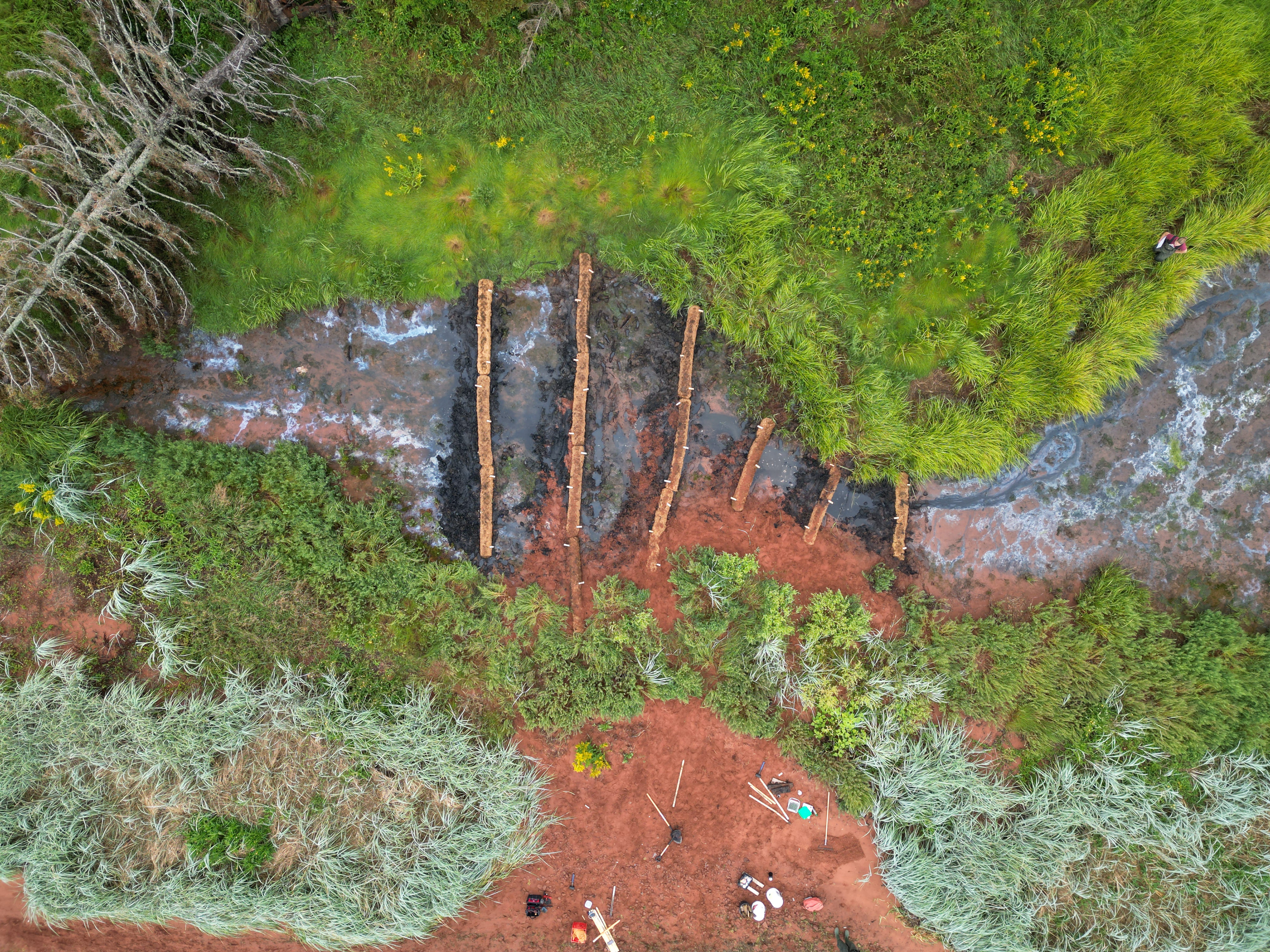
The goal of SSWA’s nature-based solution was to alter the hydrodynamics of the estuary in a concentrated project area to prevent the influx and entrapment of the sea lettuce behind the sandspit. This was done in a step-wise fashion, where first we set up mechanisms to encourage sediment deposition, then on the accumulated sediment we started transplanting the appropriate salt marsh grass species, Sporobolus alterniflorus, commonly known as smooth cordgrass. There were two sediment-accumulating structures we decided to try: coir logs and brush mats. Coir logs are a more traditional approach for coastal sediment re-working, where the 6 foot long tube-like structures made of coconut fiber are installed in the intertidal region to both gather and hold sediment in place as the tide rises and falls. Our choice to implement brush mats was more experimental, to see if there was a more cost- and labour-effective approach to encouraging sedimentation in the project area. Results of this alternative method will be evident in late-spring of 2026.
Following our sedimentation efforts, enough sand had accumulated surrounding the coir logs to plant some grass plugs. These plugs were harvested from a different patch of healthy cordgrass in the estuary, allowing the new species to intermingle and grow alongside the pre-established cordgrass meadow. Over time with yearly planting and continued sedimentation efforts, we aim to keep expanding further into the estuary while the existing and transplanted marsh grass fills in the newly-available niches we have provided them.
Little by little, the salt marsh on the west bank will continue to grow into the estuary. With a little extra TLC from SSWA, the salt marsh will one day join with the sandspit and make a vast field of salt marsh grass and salt-loving perennials. The sea lettuce meanwhile, will be much more limited in where it can accumulate and decompose, leading to diminished anoxia within the DeSable River estuary, and allowing for the species who occupy it to continue thriving.


