July 3, 2026
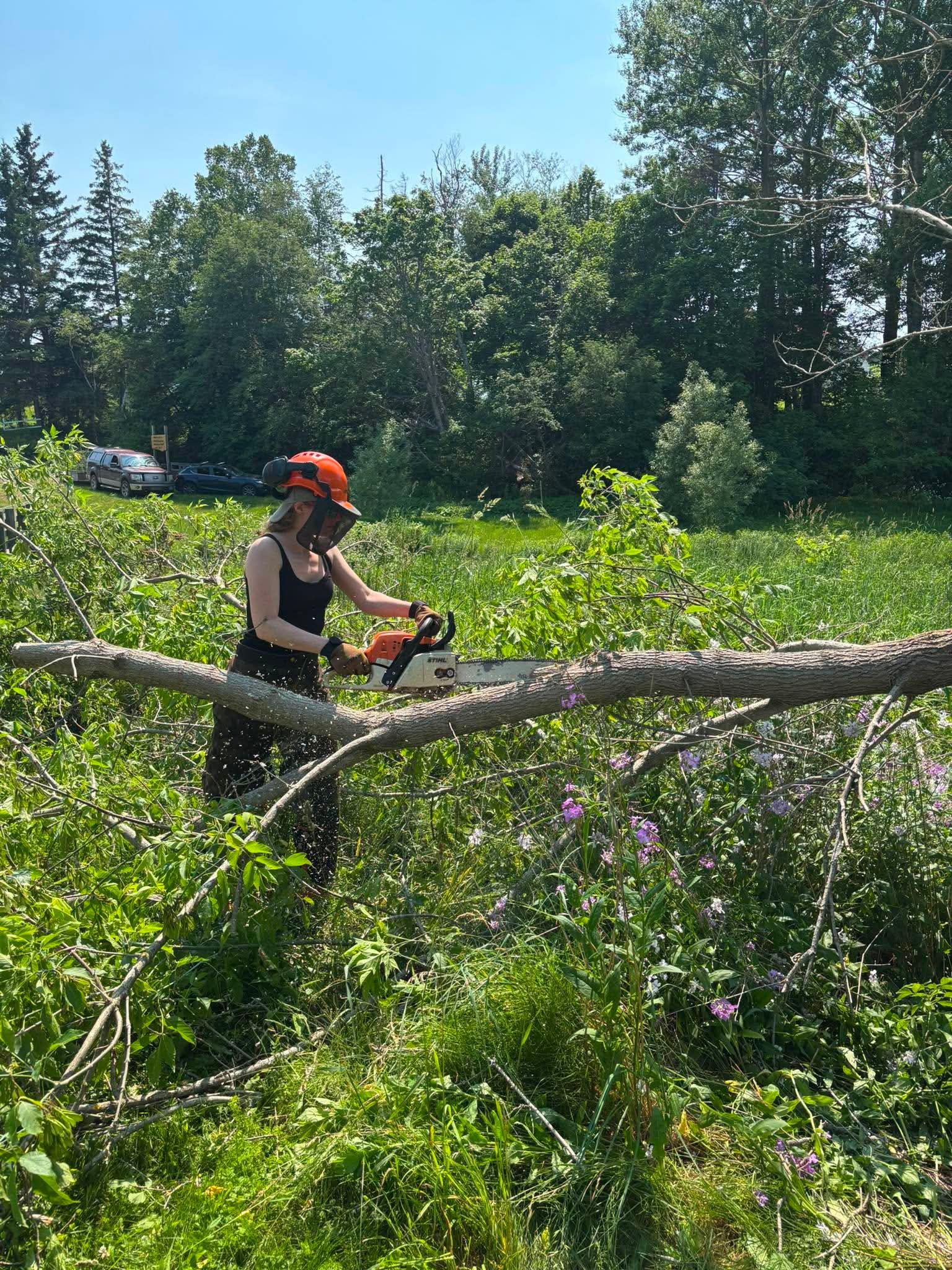
Hey folks! This week was another busy one for the South Shore Watershed crew. We had a variety of projects focused on maintaining healthy forests and waterways. We started Monday by completing maintenance on our cover logs before spending the afternoon removing invasive species. One of the biggest tasks was dealing with a large Manitoba Maple tree in one of our parks. Although Manitoba Maple provides shade and grows quickly, it is considered an invasive species in many parts of Prince Edward Island because it can outcompete native trees and reduce biodiversity. Removing invasive species for native plants helps create space for native plants and wildlife to thrive.
On Tuesday morning, our crew joined several other watershed groups for a tour of the Frank Gaudet Tree Nursery. The tour gave us a behind the scenes look at how native trees and shrubs are grown and prepared for planting throughout the province. Learning where these plants come from and how they are cultivated highlights the important role native vegetation plays in improving water quality, reducing soil erosion, and providing habitat for wildlife. In the afternoon, we continued our stream restoration work at the Tryon West Bridge by improving fish habitat and helping restore the natural function of the stream.
Since Wednesday was Canada Day, most of our crew had the day off. However, myself (Katie) and another co-worker checked in on our fish trap to monitor fish movement and then used GPS coordinates to track and locate several of our trail cameras to replace their SIM cards to gather data. Monitoring fish populations and wildlife activity provides valuable information that helps us better understand the health of our local ecosystems and evaluate the success of our restoration efforts. On Thursday, we worked on woody material management at the West Branch upstream of Westmoreland before spending the afternoon building brush mats at the East Branch in Westmoreland. Brush mats are an effective restoration technique that helps stabilize stream banks, reduce erosions, trap sediment, and encourage new vegetation to grow, all of which contribute to healthier waterways.
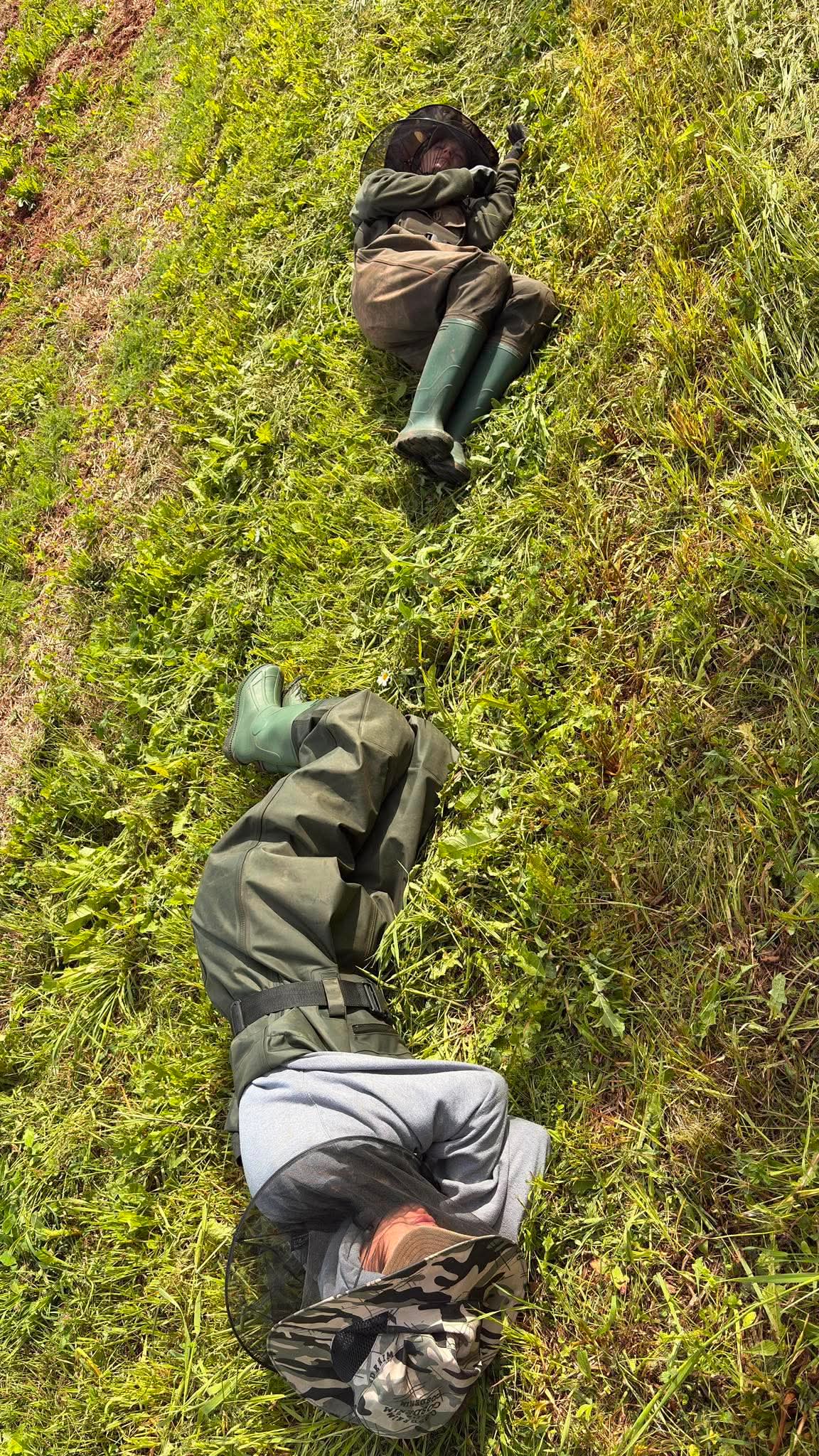
We finished off the week by joining other watersheds and participated in a Watershed Worker Training Session located at Brookvale. The station rotations included discussing the topics of workplace safety, chainsaw safety, stream table demonstration, fish identification, tree identification and invasive species. We learned a lot of valuable new information as a group while also having some fun! We hope you have a wonderful weekend!
Love,
SSWA


